The Invisible Architecture of Innovation: How Courageous Leaders Make It Durable
Every innovative team runs on two invisible levers, and this workshop makes both visible.
We start with cognitive diversity: participants place themselves along three independent preference dimensions, physically group with others who share their orientation to change, then surface and reframe the assumptions each side privately holds about the other.
From there, we turn to organisational climate, with participants rating where their own organisation is strong and where it’s weak across the dimensions that separate innovative organisations from stagnating ones. The two levers then come together in a four-quadrant model – durable innovation, excellent execution and strategic blindness, talent churn, and agreeable decline – as participants plot their own organisation and identify one move on their weakest lever.
The session closes on the role of the courageous leader: looking honestly at your own quadrant, choosing the friction-creating voice over the comfortable one, and defending the invisible work that never makes a board slide.
Takeaways:
- Courageous leaders champion the colleague whose different way of thinking creates friction, not just the one who agrees with them – cognitive diversity only helps if someone dares to keep it in the room.
- Courageous leaders defend the climate behaviours nobody puts in a quarterly review – debate, risk-taking, idea-time – because those are what actually decide whether people speak up.
- Courageous leaders resist the easier path of fixing only one lever, because real courage means building climate and cognitive diversity together, not settling for whichever is more comfortable.
- Courageous leadership is what turns a diagnostic into change – looking honestly at your own quadrant, choosing friction over harmony, and defending the work that never makes the slide.
Luc’s Bio
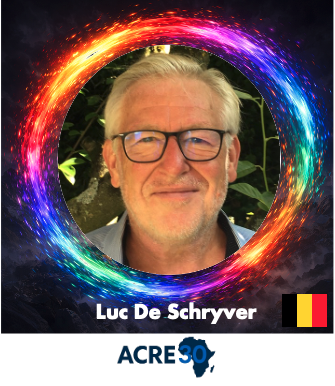
Luc De Schryver is the founder of O2C2 Consulting in Brussels, Belgium, where for more than 25 years he has helped organizations across Benelux, UK, Spain, and Germany build the innovative capacity of individual employees, teams, and the wider organizational environment.
He began his creative leadership path in 1991 at the University of Buffalo, where he earned his Master of Creativity and Innovation, and later brought the systemic approach to creativity and innovation to Europe. He is a certified ICP trainer and one of the few professionals worldwide accredited to train others as certified VIEW and SOQ users.
Luc is the author of Toegepaste verbeelding: Intuïtieve versus (doel)bewuste creativiteit (Uitgeverij Maklu), and his forthcoming book, The Invisible Architecture, argues that innovation culture rests on two levers most leaders never learn to see — organisational climate and cognitive diversity — and that moving both together, not just one, is what separates organisations that keep surprising themselves from those that quietly decline.
Innovation isn’t a slogan. It’s a system — and it’s Luc’s fervent passion to show leaders the one they’ve already built, whether they meant to or not.
Luc’s Links
- LinkedIn: Profile
- Website: www.o2c2.eu